Jonny Steventon
Founder


Product roadmaps are often treated as fixed plans, packed with features and dates that rarely survive first contact with reality. Founders expect certainty, teams feel pressured to deliver, and stakeholders assume everything on the roadmap is a promise. When things change, trust starts to erode.
In practice, a good product roadmap isn’t about predicting the future. It’s about creating alignment, setting direction, and helping teams make better decisions as the product evolves. When done well, a roadmap provides clarity without rigidity and structure without false precision.
This article breaks down what a good product roadmap actually looks like, what it should include, and just as importantly, what it should avoid.
What a good product roadmap actually looks like
A product roadmap is one of the most misunderstood artefacts in product development. Many teams see it as a long list of features with deadlines attached. Others treat it as a contract. Almost everyone feels frustrated when it inevitably changes.
A good roadmap is neither a wishlist nor a fixed delivery plan. It’s a decision-making tool that helps teams focus on the right problems at the right time, while leaving space for learning and iteration.
A roadmap is not a feature wishlist
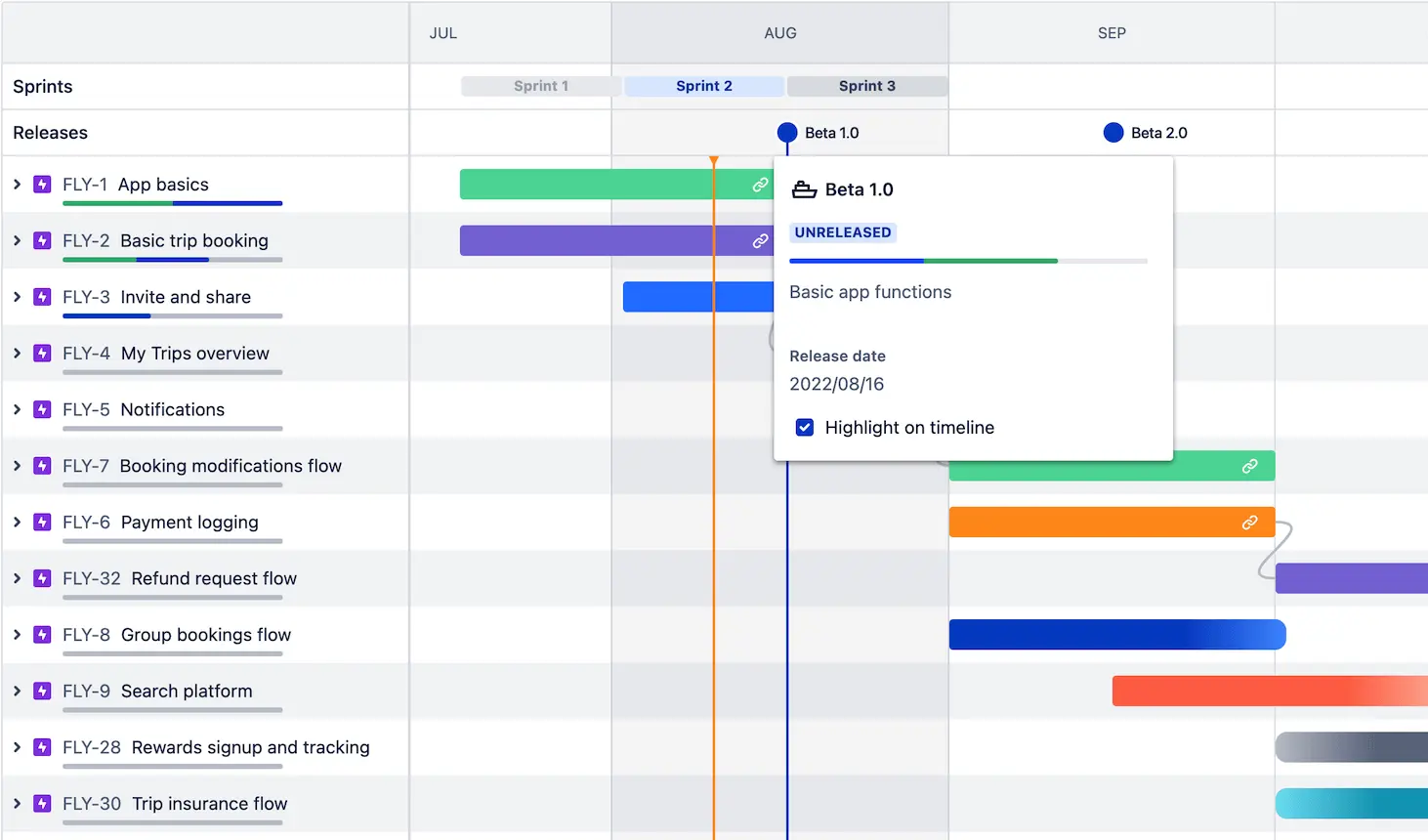
The most common mistake we see is roadmaps that are essentially glorified to-do lists. Dozens of features, tightly packed timelines, and very little context. This approach assumes everything is equally important and equally well understood.
Early-stage products, in particular, are built on assumptions. A roadmap should reflect that reality. It should show priorities, dependencies, and learning milestones, not just outputs.
If your roadmap only answers “what are we building?”, it’s incomplete. A good roadmap also answers “why are we building this now?” and “what needs to be true before we move on?”
A good roadmap is outcome-led, not feature-led
Strong roadmaps focus on outcomes rather than features. Instead of listing functionality, they centre on the problem being solved or the goal being achieved.
For example, rather than “Build a messaging system”, a roadmap might state “Enable users to communicate without leaving the platform”. The feature is just one possible solution. Framing work this way keeps teams flexible and focused on impact rather than implementation.
This is especially important for MVPs, where learning is just as important as shipping.
It shows phases, not false precision
Early roadmaps work best when they are phased rather than date-heavy. Exact dates create a false sense of certainty when requirements are still evolving. A clear structure is often:
Now: what is actively being built and validated
Next: what is planned once current assumptions are proven
Later: opportunities that are understood but not yet committed
This gives direction without locking the team into decisions that may no longer make sense in a few weeks’ time.
It makes risk and dependencies visible
A strong roadmap doesn’t hide uncertainty. Technical dependencies, external integrations, regulatory constraints, and unanswered questions should be visible early on.
This helps teams plan realistically and avoids surprises during design and development. It also builds trust with stakeholders, because uncertainty is being managed rather than ignored.
A roadmap isn’t weaker because it admits risk. It’s stronger.
It’s a communication tool, not just a delivery plan
One of the most valuable roles of a roadmap is alignment. A good roadmap can be shared with designers, developers, founders, and stakeholders, and everyone understands the direction of travel.
This only works if the roadmap is clear, concise, and revisited regularly. Roadmaps should evolve alongside the product. Treating them as static documents usually means they stop being useful very quickly.
Final Thoughts
A good product roadmap doesn’t try to predict the future perfectly. It creates clarity in the present and flexibility for what comes next.
If your roadmap helps your team prioritise the right problems, make better decisions, and move forward with confidence, it’s doing its job. If it’s just a long list of features with dates that everyone knows won’t hold, it’s time to rethink it.